











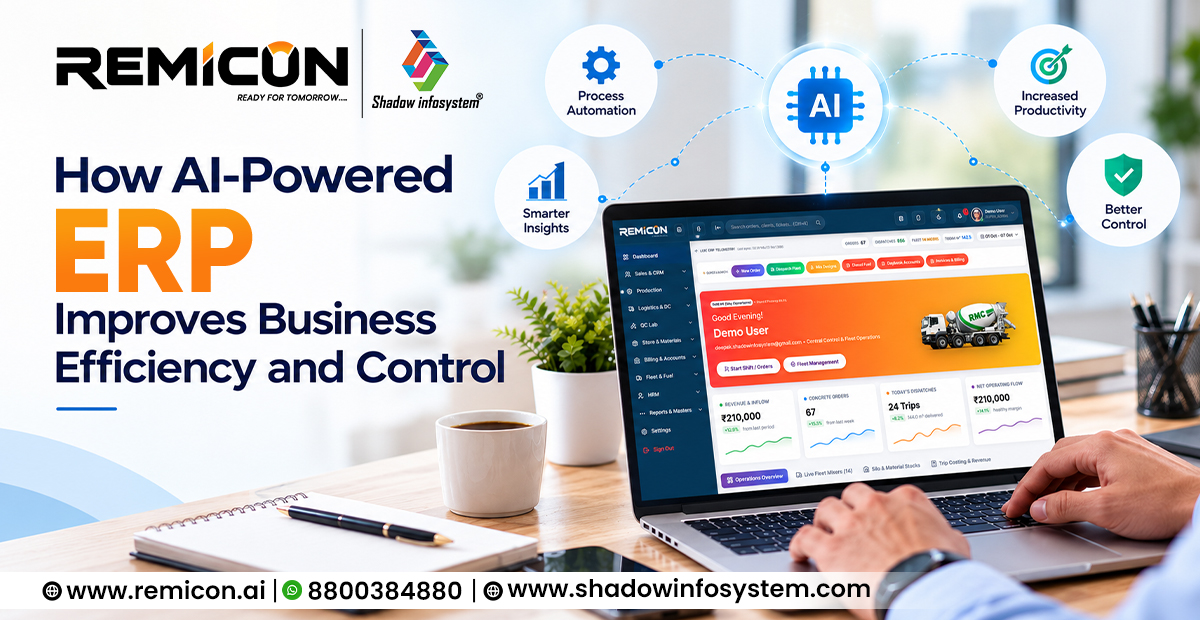
Are you spending too much time tracking operations, identifying business gaps, and controlling unnecessary costs? AI-powered ERP helps you turn business data into actionable insights, automate routine tasks, and make smarter decisions with greater confidence.
Modern Businesses today need more than software that records transactions and maintains operational data. They need systems that help them understand performance, identify gaps, reduce manual effort, and make informed decisions. This is where Artificial Intelligence (AI) is transforming the capabilities of Enterprise Resource Planning (ERP) software.
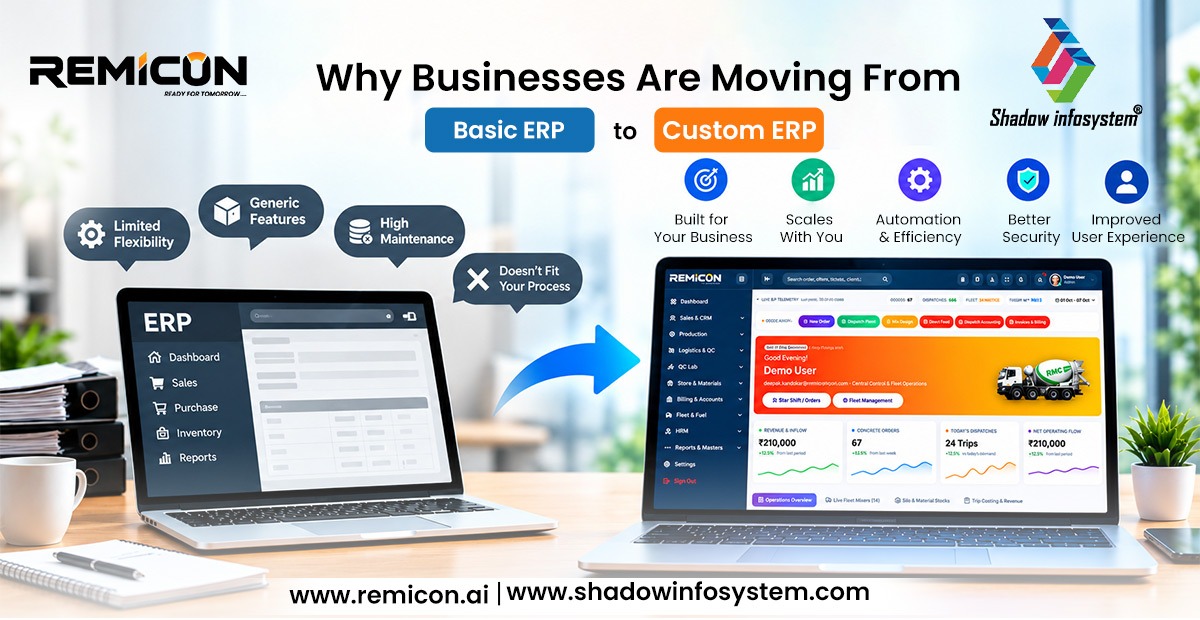
Traditional ERP systems help businesses manage multiple functions through a centralized platform. However, since they offer limited customization, businesses often end up paying for and using unwanted features that do not align with their actual requirements, making workflows more complex than necessary. With AI, ERP systems can go beyond data storage and routine processing to support data analysis, intelligent notifications, automated tasks, and more proactive decision-making.
By combining AI with ERP, businesses can improve coordination between departments, gain better visibility into operations, and identify opportunities to control costs. The result is a more connected and efficient approach to managing everyday business activities.
What Is the Role of AI in ERP Software?
AI in ERP software helps companies analyze their operational data. As opposed to relying solely on manual analysis and conventional reporting, AI-based features can aid in making sense of the data, detecting any anomalies, pointing out any deficiencies, and assisting in carrying out regular operations.
For instance, a business may generate large amounts of data through sales, purchases, inventories, manufacturing, shipping, and accounting. Analyzing this data manually might be time-consuming since each department keeps its own records.
An AI-enabled ERP system can bring relevant data into context and thus help in detecting those areas that need further attention. In addition, depending on its features, it can even carry out some operations automatically and alert the relevant persons.
Thus, ERP becomes a more proactive business management system rather than just a system that documents completed operations.
How AI Supports Better Monitoring and Faster Business Decisions
1. Identify Issues Early, Get Smart Alerts, and Keep Your Business Running Smoothly
One of the valuable applications of AI in ERP is identifying gaps that may otherwise go unnoticed during routine operations.
Businesses frequently encounter discrepancies between planned and actual activities, missing information, unexpected expenses, inventory mismatches, or delays in completing tasks. When these issues are discovered late, they can affect productivity and increase operational costs.
AI-enabled ERP capabilities can help flag relevant discrepancies, unusual patterns, or missing information based on available data and configured rules. Notifications can direct attention towards areas that require review, allowing teams to investigate issues before they create larger operational problems.
This supports better monitoring, timely corrective action, and greater accountability across departments.
2. Turn Sales Data into Faster Decisions and Better Customer Outcomes
ERP systems collect valuable information from different business functions, but collecting data is only the first step. Businesses also need to understand what that information indicates.
AI-assisted data analysis can help identify trends, compare performance, detect anomalies, and highlight relationships within operational records. This allows managers to evaluate business performance with greater clarity instead of relying solely on manual calculations and scattered reports.
AI does not replace managerial judgment. Instead, it helps make relevant information easier to interpret, enabling decision-makers to respond with greater confidence.
3. Automate Routine Tasks, Save Time, and Focus on Growing Your Business
Repetitive administrative work can take employees away from activities that require attention, experience, and decision-making. Data entry, record updates, routine calculations, and repeated verification tasks can collectively consume a significant amount of working time.
AI-enabled ERP software can support automation wherever suitable functionality is available. Combined with workflow automation, it can reduce repeated manual steps, improve consistency, and help teams complete routine processes more efficiently.
Automation can also improve coordination between departments by making relevant information available within connected workflows.
The objective is not to remove human involvement from every process. It is to reduce avoidable manual work and allow employees to focus on activities that contribute more directly to business performance.
4. Understand Customer Needs Better, Deliver Better Service, and Increase Sales
Inaccurate or incomplete data can affect billing, purchasing, inventory management, reports, and financial decisions. Manual data entry and repeated record creation can increase the chances of mistakes.
ERP software helps businesses organize and manage their data more effectively. AI-powered features can also help identify errors, check information, and detect unusual data patterns when configured.
Automated data retrieval reduces manual work and helps keep business records consistent. However, important information should still be verified, especially when it relates to taxation, invoicing, or legal compliance.
5. Track Costs in Real Time, Prevent Unnecessary Expenses, and Improve Profitability
Small operational inefficiencies can gradually affect profitability. Unnecessary purchases, duplicate entries, unrecorded expenses, inventory discrepancies, and billing errors can contribute to financial leakage.
AI-assisted analysis and ERP-based monitoring can help businesses identify unusual transactions, recurring expense patterns, and discrepancies that deserve attention. When combined with appropriate approval workflows and financial controls, these capabilities can improve visibility into where money is being spent and where corrective action may be required.
Better control over procurement, inventory, expenses, billing, and receivables can help reduce avoidable losses.
The financial benefit comes from identifying and addressing inefficiencies, not from assuming that AI will automatically eliminate every source of leakage.
6. Save Valuable Time, Boost Team Productivity, and Achieve More with Less Effort.
When employees spend less time searching for records, compiling reports, and performing repetitive tasks, they can direct more attention towards core responsibilities.
An integrated ERP system makes operational information easier to access, while suitable AI and automation features can further reduce the time required for selected activities.
Faster information retrieval, simplified data entry, timely notifications, and streamlined workflows help departments coordinate more effectively.
Over time, these improvements can contribute to better resource utilization, quicker responses, and more productive working practices.
7. Track Every Operation in Real Time, Improve Team Coordination, and Stay in Control
Business functions are interconnected. A change in procurement can affect inventory, production, dispatch, and financial planning. When each department works with disconnected records, understanding these relationships becomes difficult.
ERP software connects operational information through a common system. AI-enabled analysis can add value by helping users identify relevant patterns and areas requiring attention.
This broader visibility supports more informed planning, better coordination, and a clearer understanding of business performance across departments.
8. Customize Your Business Processes and Grow Without Limits
As businesses grow, their operational requirements evolve. They may introduce new workflows, expand into additional locations, handle more transactions, or require better integration between departments.
AI-enabled ERP solutions built using modern technologies can support a more forward-looking approach to business management, provided their capabilities align with the organization’s actual requirements.
Rather than evaluating ERP software only on its current features, businesses should consider how effectively it can support changing processes, connected workflows, and future operational priorities.
Why Businesses Need More Than a Generic ERP Approach
AI can improve ERP efficiency, but the value of an ERP solution also depends on how well it fits the business using it.
A generic ERP approach may offer commonly used modules, yet businesses often differ in their workflows, reporting requirements, approval structures, data practices, and operational priorities. A system that does not align with these requirements may leave teams dependent on spreadsheets, manual workarounds, or disconnected tools.
A more business-focused ERP approach considers how departments actually work and where technology can make a practical difference.
The right solution should combine useful automation, reliable information management, an intuitive user interface, relevant reporting, and features that support the organization’s operational needs. AI should contribute to this approach by improving how information is handled and interpreted, rather than serving merely as a label.
REMICON by Shadow infosystem: One Intelligent Platform. Complete Business Control.
At this stage, the focus shifts from what AI can do in ERP software to how these capabilities can be applied through a business-oriented solution.
REMICON by Shadow infosystem is an AI-enabled ERP software solution developed with a focus on practical business operations, modern technology, and simplified process management. Rather than following only a generic ERP model, REMICON aims to align ERP capabilities with the operational requirements of businesses across different industries.
Its approach brings together structured business processes, automation, data visibility, and intelligent functionality to help organizations manage their work with greater efficiency.
Get Smart Alerts, Spot Costly Gaps Early, and Take Action Before Profits Slip Away.
Business issues are easier to address when they are identified at the right time. REMICON’s AI-enabled approach focuses on helping users identify relevant gaps and areas requiring attention through notifications and operational insights, subject to the applicable feature and configuration.
This can support better monitoring and help teams respond to discrepancies without depending entirely on repeated manual checks.
Real-Time Insights for Better Plant Management
REMICON supports a more structured approach to business information by bringing operational records into an integrated ERP system. Its AI-enabled capabilities can help businesses make better use of available data, understand relevant patterns, and identify areas that need closer attention.
With better access to business information, managers can evaluate operations more effectively and make decisions based on clearer insights.
Quick GST Data Access for Faster, Easier Compliance
Entering and maintaining business details manually can slow down routine administrative work. REMICON supports GST number-based detail retrieval, helping users fetch available business information by entering the relevant GSTIN.
This functionality can simplify customer or supplier record creation and reduce repetitive data entry. Users can review the retrieved information before proceeding with business transactions.
Automate Routine Tasks, Save Time, and Focus on Growing Your Business
“Less Time on Paperwork, More Time Serving Customers and Generating Sales.”
REMICON focuses on simplifying paperwork, streamlining operational workflows, and reducing repetitive administrative tasks. By bringing business activities together and automating suitable processes, it helps teams spend less time managing records and more time attending to customer needs, following up on sales opportunities, and building stronger customer relationships.
This allows businesses to improve coordination, maintain consistent records, and dedicate more time and effort to customer satisfaction and sales growth
A User-Friendly Interface for Faster, Easier Daily Operations
ERP software should make business processes easier to manage, not introduce unnecessary complexity. REMICON emphasizes an easy-to-use, standardized user interface that supports a consistent working experience.
A clear interface can help users navigate relevant functions more comfortably, access information efficiently, and follow established processes across departments. Appropriate role-based access can further support organized information access according to assigned responsibilities.
Reduce Operating Costs, Control Expenses, and Improve Profit Margins
Cost savings are often the result of several small improvements working together. Better data visibility, reduced manual effort, streamlined processes, and improved monitoring can help businesses identify inefficiencies that affect their expenditure.
REMICON’s integrated ERP approach can support closer oversight of operational records and help businesses identify potential sources of leakage. By improving visibility across relevant activities, businesses can take more informed steps towards controlling avoidable costs and using resources efficiently.
Changing Business Needs With Modern, Scalable Technology
REMICON is designed around modern technology and an AI-enabled approach to ERP, with an emphasis on practical business value. Its focus is on bringing intelligent functionality and operational management together instead of treating ERP as a collection of disconnected modules.
For businesses evaluating their next ERP solution, this offers a way to consider not only present requirements but also the need for better information access, process efficiency, and evolving operational demands.
Seamless API Integrations for Connected Business Operations
REMICON supports API integrations that help businesses connect essential tools, third-party systems, and existing business applications within their operational workflows. These integrations enable smoother data exchange, reduce duplicate data entry, and help teams manage connected processes more efficiently.
- GPS API Integration: Connect third-party vehicle tracking systems to access relevant vehicle and driver information, supporting better fleet visibility and coordination.
- WhatsApp Integration: Support business communication and customer coordination through integrated WhatsApp functionality.
- ERP API Integration: Connect existing ERP, CRM, and other business applications through secure APIs for smooth and reliable data exchange.
- SMS Gateway Integration: Enable SMS-based notifications and business communication for relevant operational updates.
- Accounting Software API: Connect accounting applications to streamline financial data exchange and reduce repetitive record handling.
- Weighbridge API Integration: Integrate weighbridge systems to support the transfer of weight data and improve coordination between weighing and related operational processes.
Is REMICON the Right ERP Solution for Your Business?
Yes, REMICON by Shadow infosystem can be the right ERP solution for businesses looking to improve operational efficiency through AI-enabled technology, automation, and smarter data management. Built around practical business requirements, REMICON helps streamline workflows, simplify routine tasks, and improve visibility across business operations.
With features such as AI-enabled gap identification, data analysis, GST detail retrieval, and a user-friendly, standardized interface, REMICON focuses on reducing manual effort, saving time, and helping businesses identify potential cost leakages. Its approach goes beyond generic ERP functionality by focusing on practical operational needs, making it worth considering for businesses seeking a more efficient and forward-looking way to manage their operations.
Conclusion
AI is redefining ERP software by helping businesses move beyond routine record-keeping towards smarter, faster, and more controlled operations. From identifying operational gaps and analyzing business data to automating repetitive tasks and reducing financial leakage, AI-enabled ERP creates opportunities to improve productivity, strengthen cost control, and make better-informed decisions.
REMICON by Shadow infosystem brings this forward-looking approach to business management by combining AI-enabled capabilities, workflow automation, simplified information handling, and an easy-to-use interface. Instead of a generic ERP approach, REMICON aligns technology with practical business requirements. For businesses aiming to improve efficiency, save valuable time, and gain greater control over their operations, REMICON offers a solution worth exploring for a smarter, more connected future.
Transform Your Business Operations with REMICON
Move beyond conventional ERP software with REMICON by Shadow infosystem, an AI-enabled ERP solution designed around real business requirements. From intelligent alerts and data-driven insights to workflow automation, GST detail retrieval, and cost control, REMICON helps you streamline operations and make every process more efficient.
Ready to make your business operations smarter with AI? Connect with Shadow infosystem today to know how REMICON can fit your business needs and help you work smarter, save valuable time, and gain better operational control.
Frequently Asked Questions
1. What is RMC plant ERP software in India?
RMC plant ERP software in India is a centralized business management solution designed for ready mix concrete companies. It helps manage important operations such as raw material inventory, production, batching, dispatch, fleet, fuel, billing, finance, quality control, and multi plant activities. An AI enabled ERP can further improve operational visibility by helping businesses analyze data, identify gaps, automate routine processes, and make faster decisions.
2. How does concrete batching plant software improve daily operations?
Concrete batching plant software helps businesses organize production related activities by connecting concrete orders, batching, material availability, production records, dispatch, and other operational information within a single system. This reduces dependence on separate spreadsheets and manual records while giving management better visibility into plant activities.
3. What is concrete batching plant automation software?
Concrete batching plant automation software helps automate selected production and operational processes within a concrete batching business. Depending on the system and available integrations, it can help reduce repetitive manual tasks, improve information flow between departments, maintain more consistent records, and support faster monitoring of plant operations.
4. How can batch plant production software help improve production efficiency?
Batch plant production software helps businesses maintain structured production records and coordinate production with confirmed orders, available materials, plant capacity, and dispatch requirements. Better visibility into these activities can help reduce unnecessary production, improve resource utilization, identify production gaps, and support more efficient plant management.
5. What is concrete mix design software used for?
Concrete mix design software helps manage concrete mix related information, including different mix grades, material requirements, specifications, and associated production or quality records. When connected with an ERP system, concrete mix information can become part of a broader workflow covering production, material consumption, quality monitoring, and reporting.
6. What is an RMC plant automation system?
An RMC plant automation system connects key ready mix concrete operations through digital workflows and automation. It can support activities such as inventory management, production planning, batching, dispatch, vehicle coordination, billing, reporting, and operational monitoring. The objective is to reduce manual dependency and provide better control over everyday plant operations.
7. Can AI powered ERP be used for ready mix concrete plant management?
Yes. AI powered ERP can support ready mix concrete businesses by analyzing operational data, identifying unusual patterns or gaps, generating relevant alerts, and supporting workflow automation. When combined with RMC specific functions such as production, inventory, dispatch, fleet management, finance, and quality records, AI can help management gain clearer visibility into plant performance.
8. How can RMC ERP software help reduce operating costs?
RMC ERP software can improve cost control by providing better visibility into material consumption, inventory, production, fuel usage, fleet activities, dispatch, billing, expenses, and other operational records. This makes it easier for management to identify discrepancies, unnecessary consumption, delays, and other areas where corrective action may help reduce avoidable costs.
9. Can concrete batching plant software manage multiple RMC plants?
Yes. A centralized concrete batching plant software or RMC ERP system can support multi plant operations by maintaining plant specific information while giving management consolidated visibility across locations. This can help businesses standardize processes, monitor production and inventory, review performance, and manage multiple plants more efficiently.
10. Why choose an integrated ERP instead of separate batching and accounting software?
An integrated ERP connects production, inventory, dispatch, fleet, sales, billing, finance, quality, and other business activities within one platform. Instead of maintaining disconnected systems and repeatedly transferring data between them, businesses can work with connected operational records and gain better visibility across the complete RMC workflow.